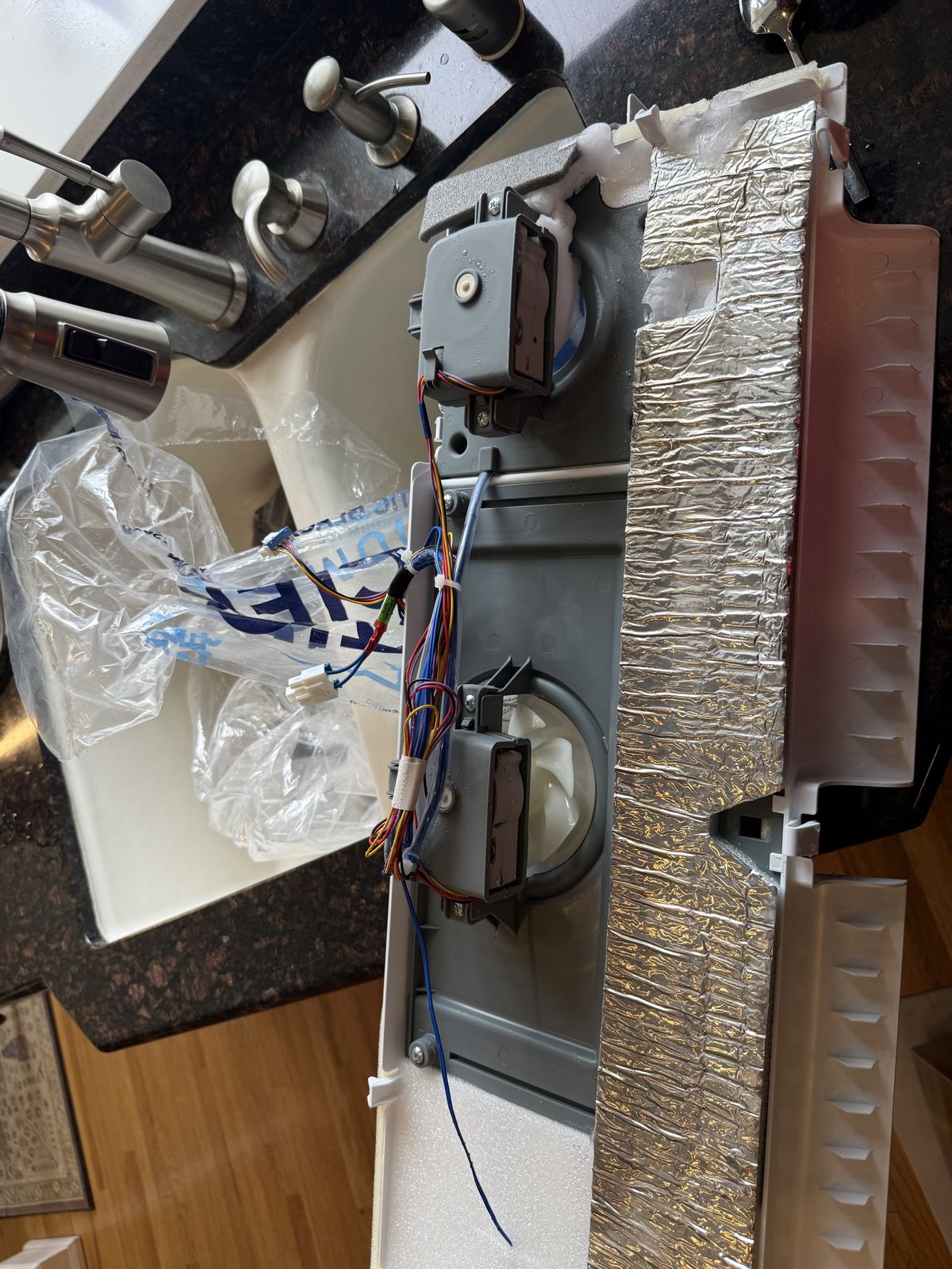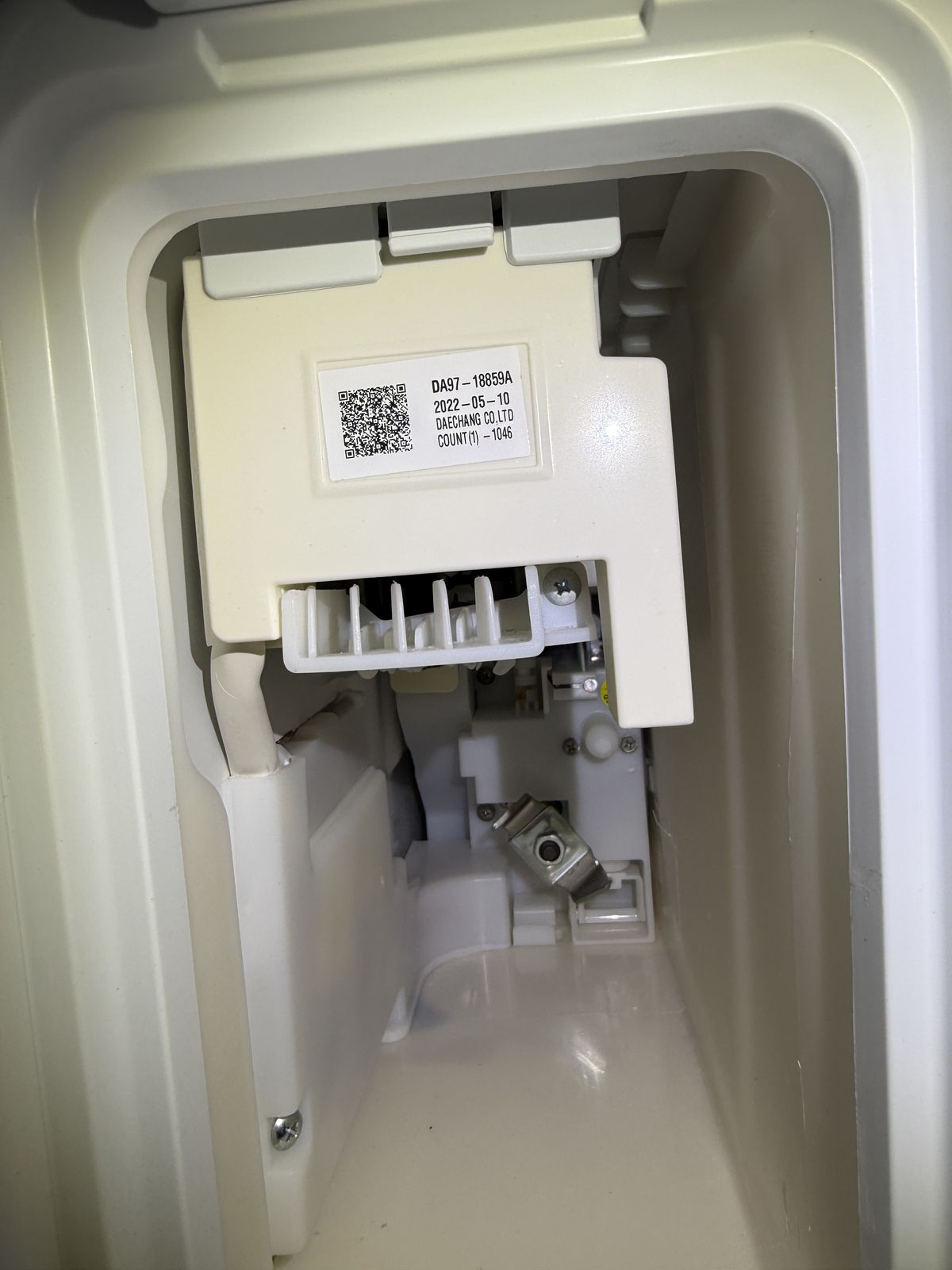
Open the freezer and there it is: a mold full of perfectly formed cubes that have been sitting, frozen and smug, for days — while the bin below stays empty. Water supply is clearly fine; freezing is clearly fine. What's broken is the harvest — the little mechanical drama that's supposed to evict the cubes — and harvest failures have their own short suspect list.
How eviction actually works
Classic makers run a cycle: a thermostat waits until the mold hits ejection temperature, a mold heater warms the metal just enough to release the cubes' grip, and a motorized rake sweeps them out. Twist-tray designs skip the heater and simply crank the tray until cubes pop free. Every no-drop complaint is one of those actors missing a cue.
The rake frozen mid-sweep
Fingers stopped halfway through the cubes is the visual giveaway: the ejector motor stalled — module gears worn, or the rake jammed on an oversized cube from an earlier overfill. Gently freeing a jam sometimes buys a recovery; a module whose motor stalls on a clear mold is done, and it swaps as a complete, affordable unit.
The heater that never lets go
If the rake strains against cubes welded into the mold, the mold heater has failed — the release warmth never comes, the motor grinds against solid ice, and eventually the safety gives up. A meter reads the heater's resistance in seconds. Same symptom family: mineral scale coating the mold making cubes cling — a real find in the valley's harder-water zones, cured with a proper mold cleaning rather than parts.
The thermostat that never says "ready"
If nothing ever even tries — no hum, no sweep, cubes ancient — the mold thermostat may never be closing to start harvest, or the freezer isn't reaching the temperature the thermostat demands. That second one matters: a freezer drifting in the teens makes ice slowly and harvests never, so the ten-dollar thermometer check comes before any part. Twist-tray units add their own suspect: a stripped tray coupling that clicks without twisting.
The visit
Harvest diagnosis is quick and satisfying: watch a forced cycle, meter the heater and motor, read the mold temperature, and the guilty actor names itself. Modules, heaters and thermostats ride the van for common brands across the San Jose metro — one written fixed price, and the first cubes usually drop before we're out of the driveway.