The glass fills at a trickle, or the dispenser paddle gives you a hum and nothing else. A slow or dead water dispenser is one of the most satisfying refrigerator faults to chase, because the water path is a single line with only four or five places to fail — and they sort themselves in a tidy order, cheapest first.
1. The filter, on your neighborhood's clock
The cartridge is the first suspect and the most local one: Santa Clara Valley water is a blend, and hardness genuinely varies by zone — groundwater-fed streets run hard, imported-supply streets run softer. A filter that lasts its full six months in one San Jose zip can clog early a few miles away. A weakening stream that recovered instantly last time you swapped the filter has told you the whole story: swap it again, purge a couple of quarts, and re-test before suspecting anything mechanical. Bypass trick: most housings accept a bypass plug (or run briefly without the cartridge on some models) — if flow roars back, the case is closed.
2. The frozen line in the door
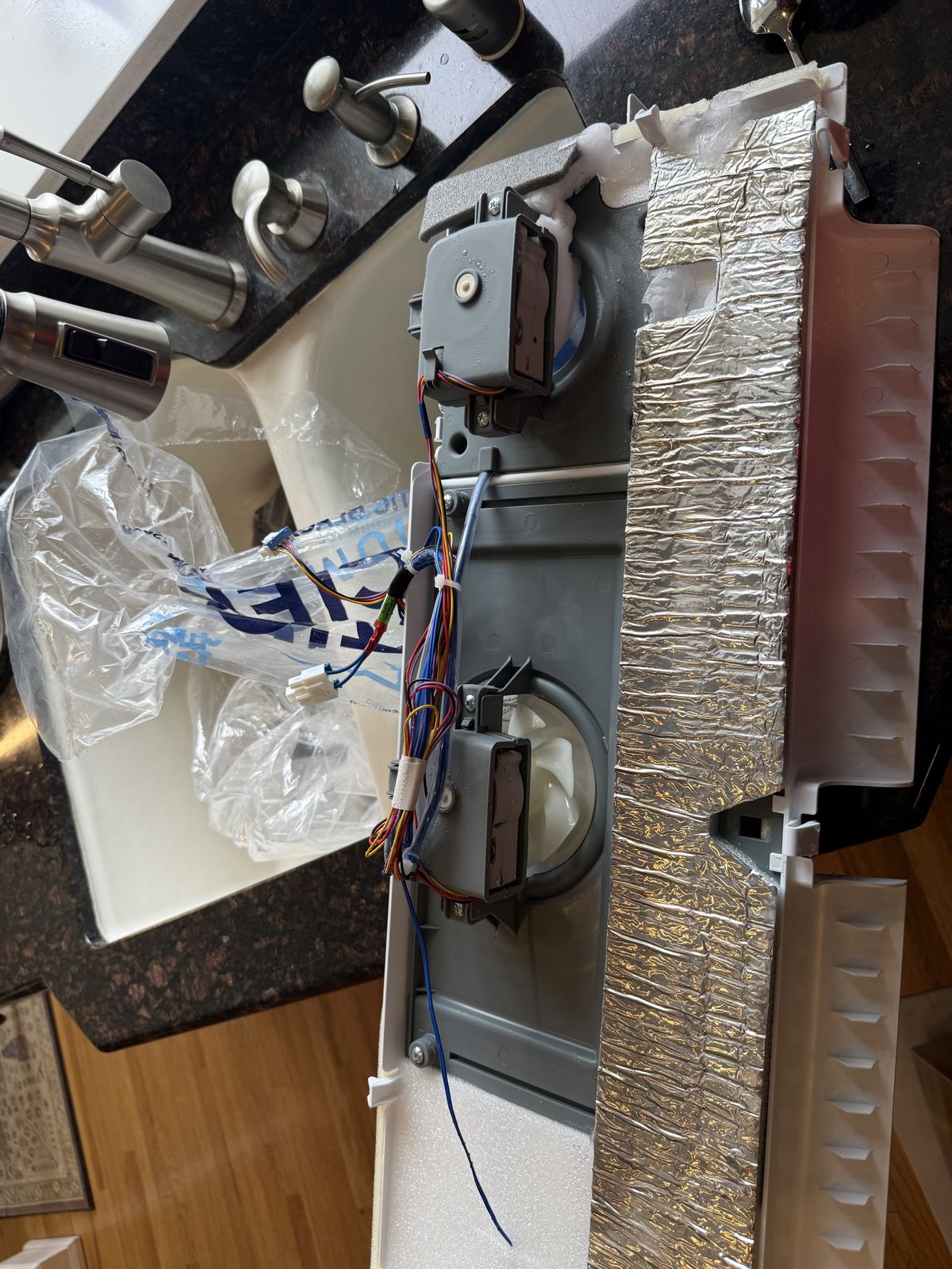
French-door and side-by-side units route the dispenser line through the freezer door, and if the freezer runs colder than it needs to — or the door heater that protects the line weakens — the water column freezes solid. The tell: ice dispenses fine, water gives nothing, and after a day unplugged with the doors open, water mysteriously returns… until it freezes again. The lasting fix addresses the cause: freezer set-point, the door line heater, or an airflow fault chilling the door cavity.
3. The inlet valve at the back
The dual solenoid valve behind the fridge feeds both ice maker and dispenser. Scale and debris wear its dispenser side: flow drops across every filter change, or the valve hums without opening. It tests conclusively with a meter and a flow check, and it's a standard, stocked part — we also read your house pressure at the fridge, because a valve can only pass what the line delivers.
4. Air, switches and the small stuff
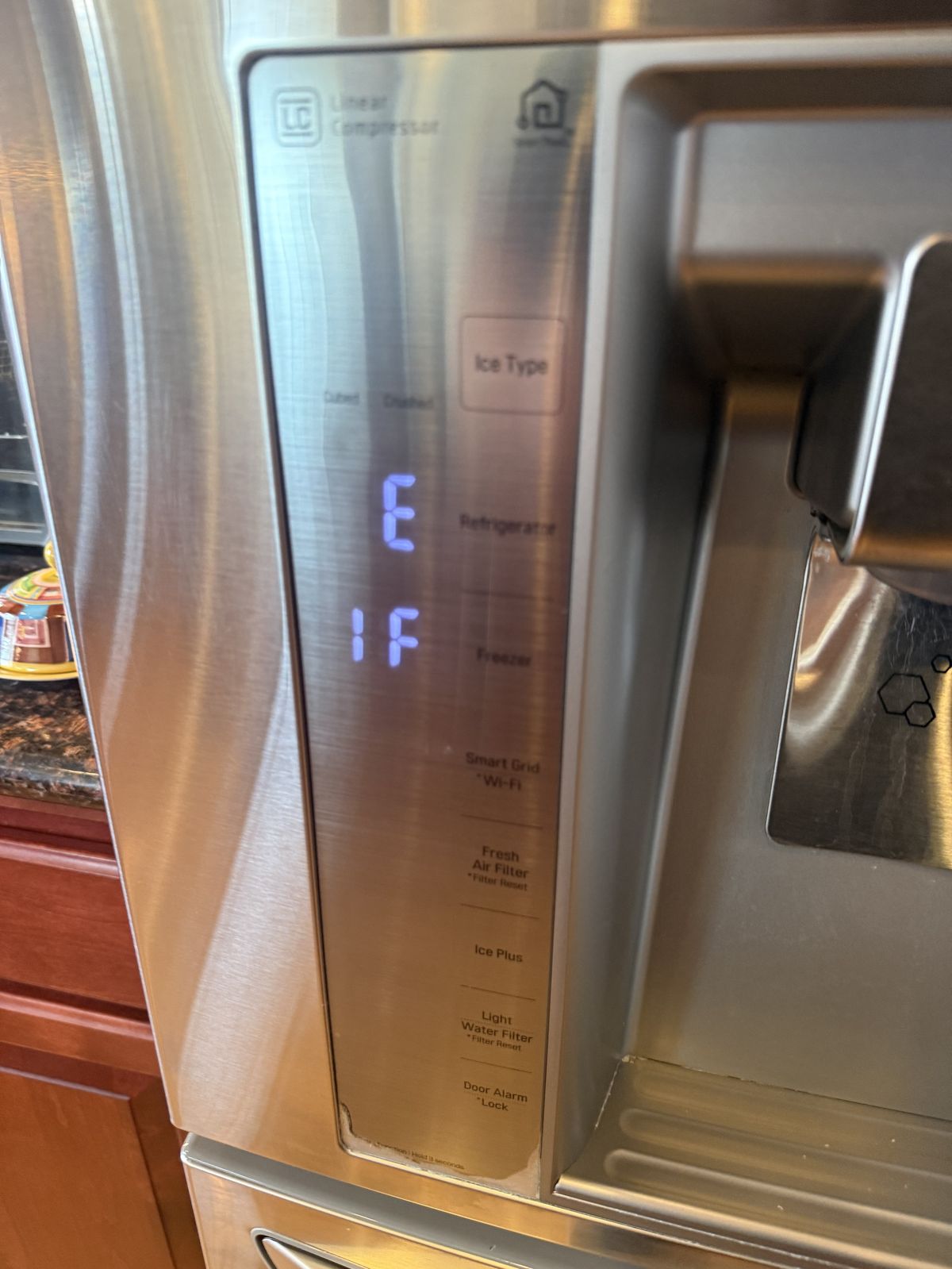
A sputtering, air-spitting stream after a filter change just needs a long purge. A dead paddle with a healthy path points at the dispenser microswitch or the door-lock logic (dispensers disable when the display locks — the accidental child-lock is a classic phone fix). Persistent drips after dispensing usually mean air trapped in the tank line, not a failing valve.
The visit
Dispenser calls are tidy, fixed-quote work across San Jose and the South Bay — filter housing, door line, valve and switches tested in order, pressure measured, and the first full-speed glass poured before we pack up.